
Parkinson’s Disease Research in Kyrgyzstan
Project: Genetic Epidemiology and Architecture of Parkinson’s Disease and Parkinsonian Disorders in Kyrgyzstan — KyrPARK
Project period: 2024–2029Last updated: 22 October 2026
The I. K. Akhunbaev Kyrgyz State Medical Academy (KSMA), together with the University of Lübeck, Germany, and partners in Kyrgyzstan, is conducting a research project within the Global Parkinson’s Genetics Program (GP2), an international program investigating the genetics of Parkinson’s disease.
The project combines clinical and genetic research with research capacity building in Kyrgyzstan. Alongside establishing a Parkinson’s disease cohort and biobank, it supports training and mentorship, develops laboratory and digital infrastructure, and strengthens collaboration between clinicians, researchers, and data specialists. These activities build a foundation for sustained, locally led research and expand the representation of Central Asian populations in international genetic studies.
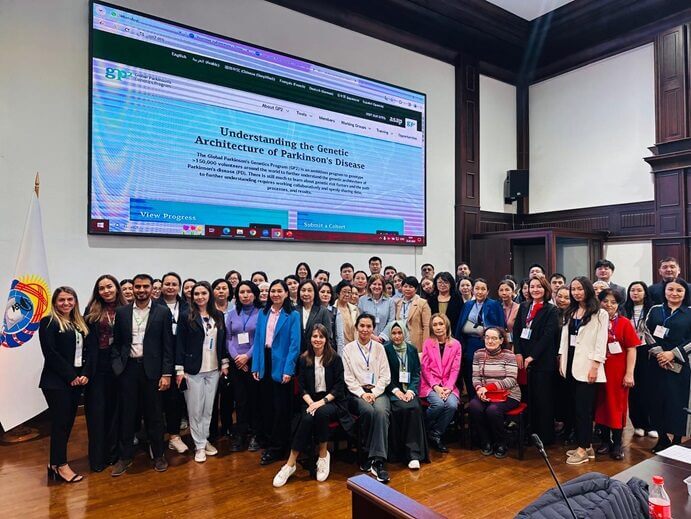
The first GP2 workshop in Kyrgyzstan. Bishkek, March 2024.
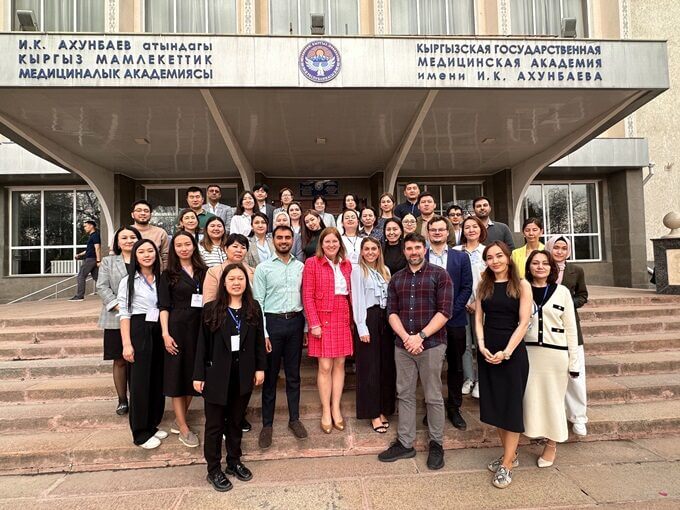
The Parkinson’s disease research team in Kyrgyzstan. Bishkek, March 2024.
Project objectives
- Establish a research cohort comprising people with Parkinson’s disease and control participants.
- Collect standardised data on motor and non-motor symptoms, disease course, family history, and environmental and lifestyle factors.
- Collect and store biological samples for genetic research.
- Develop a network of clinical research sites in Bishkek and across the regions of Kyrgyzstan.
- Establish a foundation for longitudinal follow-up.
- Strengthen local clinical and research capacity through training and mentorship in Parkinson’s disease and other movement disorders, clinical research methods, medical genetics, and bioinformatics, alongside the development of laboratory infrastructure and data systems.
Current research activities
Participant recruitment, clinical assessments, and biological sample collection are ongoing across seven clinical sites and through outreach visits to regions throughout Kyrgyzstan. As of October 2026, approximately 1,600 participants have enrolled in the study.
Clinical assessments include standardized evaluations of Parkinson's disease motor and non-motor features. Control participants also undergo assessments in accordance with the study protocol.
Infrastructure for sample processing and storage has been established at KSMA. With support from the GP2, the project acquired an ultra-low-temperature freezer for storage at −80 °C and a generator for backup power. KSMA provided dedicated premises for sample processing and storage.
The team is developing systems to manage and track research data and biological samples. Quality assurance includes checks for completeness and consistency, verification against source records, and the introduction of digital tools for data collection and processing.
Team publications address patient participation in research and access to Parkinson’s disease care. The research program's development is described in a preprint that has not yet been peer-reviewed. Links are available in the publications and research resources section.
KSMA has also provided a dedicated office for specialist movement disorders clinic/ consultations at Academic Clinic No. 7, formerly the Republican Diagnostic Centre, at 27/1 Kievskaya Street, Bishkek.
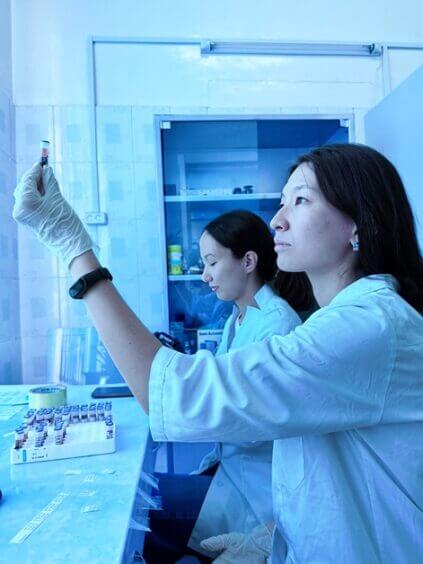
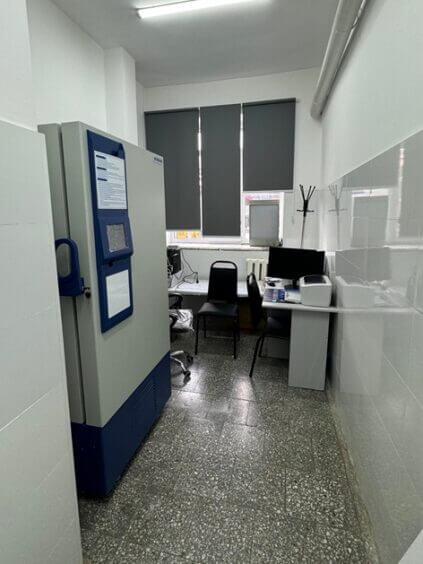
Sample processing and project research infrastructure at KSMA, Bishkek.
Training and research capacity building
With support from the GP2 Training and Networking Working Group, the project provides practical training, seminars, and online learning for neurologists, early-career researchers, and data specialists.
Key activities
- 28–29 March 2024, Bishkek: The first GP2 workshop brought together 30 neurologists from across Kyrgyzstan, with speakers and trainers from Germany and the United Kingdom. The program covered Parkinson’s disease, atypical parkinsonian syndromes, genetics, epidemiology, research ethics, and research methods. Practical sessions focused on clinical assessment and data collection. Patients also participated, contributing their experiences and perspectives on their needs.
- 10–11 December 2024, Bishkek: The Central Asian Movement Disorders Camp (under the support of MDS-AOS DWEP) was organized jointly with the KSMA Department of Neurology and Medical Genetics for clinicians and researchers from Central Asia (Kazakhstan, Uzbekistan, Tajikistan, Kyrgyzstan and the Russian Federation). International experts from the United Kingdom and Malaysia led practical training in the diagnosis and management of Parkinson’s disease, atypical parkinsonian syndromes, and other movement disorders.
- 5–6 June 2025, Bishkek: The second GP2 workshop focused on research data preparation and analysis, with trainers from Germany and the United Kingdom. Participants included clinicians, researchers, faculty, and students from KSMA and the I. Razzakov Kyrgyz State Technical University. Sessions covered biobanking, data management and protection, and hands-on introductory bioinformatics for genetic research.
Training continues through webinars, clinical case discussions, practical assignments, and mentorship. Team members also contribute to translating and adapting research instruments.
According to the project report, 34 neurologists and residents received clinical training, and 18 neurologists completed online MDS-UPDRS certification. Five clinicians and laboratory staff received training in biological sample collection and processing and the implementation of standard operating procedures.
In 2024–2025, Eliza Zhunusova and Aizhamal Iliazova, both members of the project team and neurology residents at KSMA, received International Parkinson and Movement Disorder Society Visiting Trainee Grants. Each completed a six-month specialist clinical training placement in Parkinson’s disease and other movement disorders.
Following her training in Thailand, Eliza Zhunusova provides specialist consultations at the Parkinson’s disease clinic within KSMA Academic Clinic No. 7, formerly the Republican Diagnostic Center, and contributes to the project’s research activities.
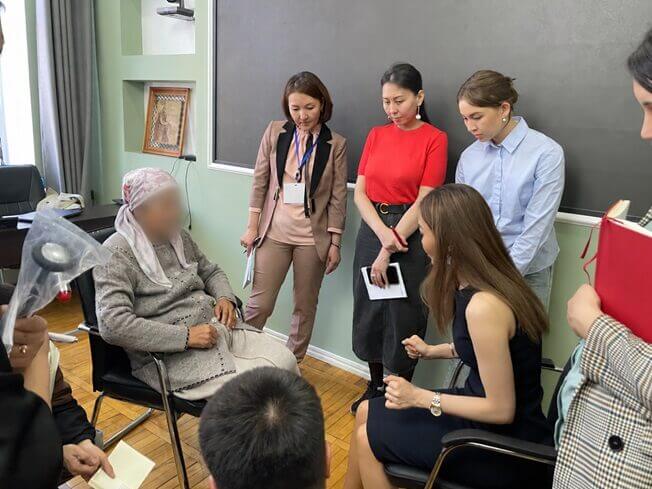
Practical training in clinical assessment and the recognition of parkinsonian signs during the first GP2 workshop. KSMA, Bishkek, March 2024.
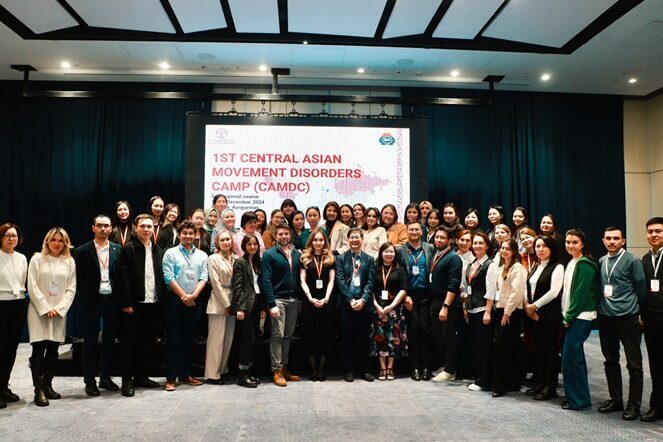
The first Central Asian Movement Disorders Camp. Bishkek, December 2024.
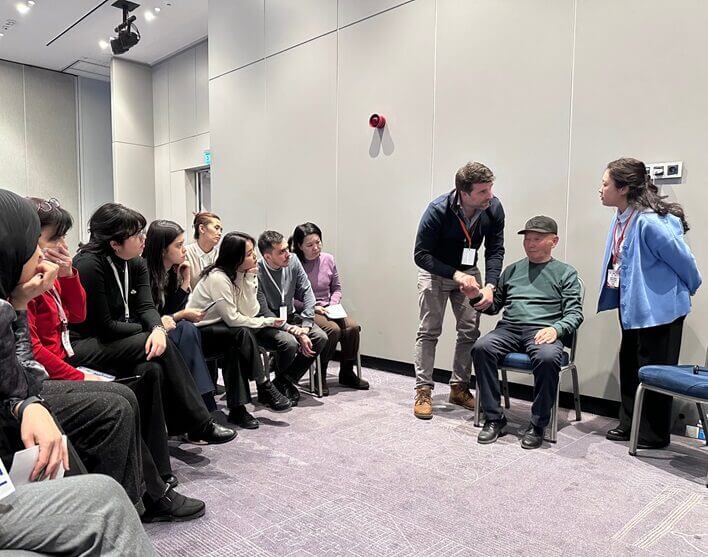
Clinical assessment masterclass at the first Central Asian Movement Disorders Camp. Bishkek, December 2024.
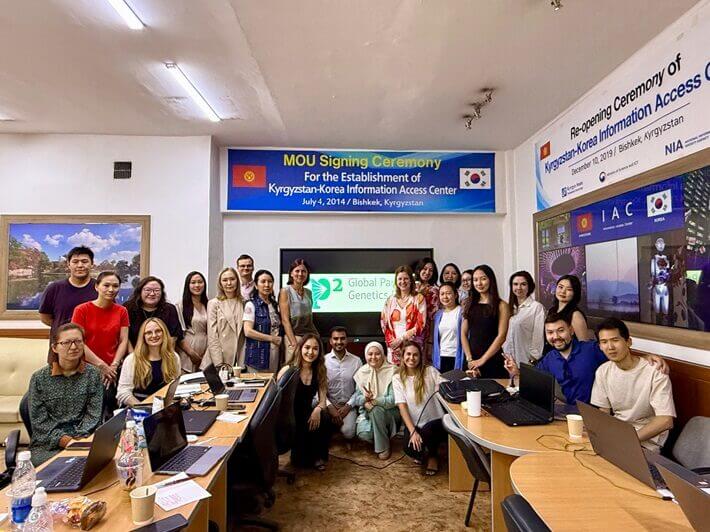
The second GP2 workshop, hosted at Kyrgyz State Technical University. Bishkek, June 2025.
Regional outreach
Outreach visits enable the team to recruit participants beyond the main clinical research sites, provide specialist consultations, and exchange knowledge with local clinicians. In 2024–2025, the team conducted mobile outreach visits to Osh, Jalal-Abad, and Batken. In September 2026, the team visited Balykchy and returned to Jalal-Abad to provide consultations and assessments for residents of these cities and surrounding areas.
During consultations, specialists assess symptoms, clarify diagnoses, and provide recommendations for further investigation and clinical management. Research participation is voluntary, and study procedures are conducted only after informed consent has been obtained.
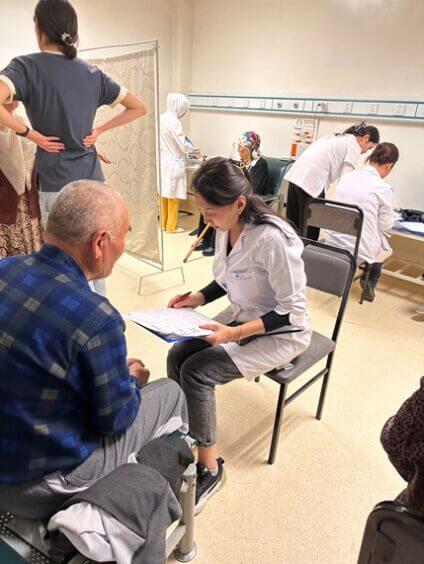
Research assessments during a mobile outreach visit. Osh, April 2025.
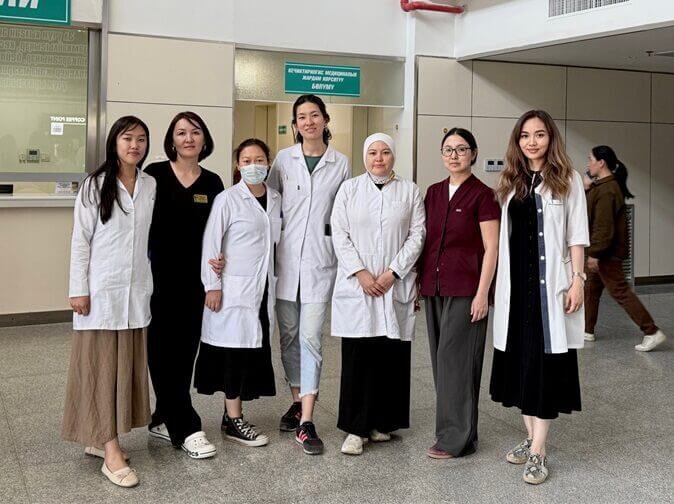
The outreach research team at Osh City Hospital. Osh, April 2025.
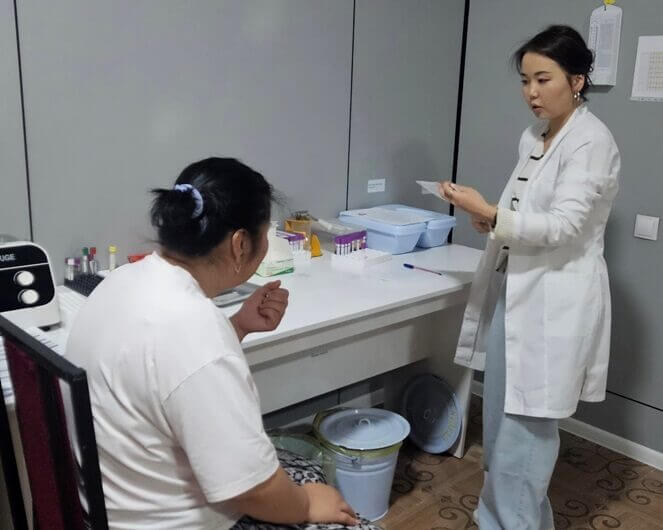
Research assessments during a mobile outreach visit. Manas, September 2026.
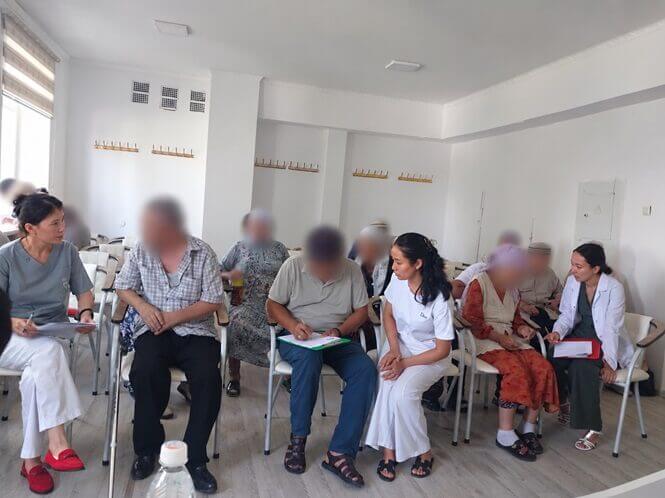
Research screening during a mobile outreach visit. Osh Region, July 2026.
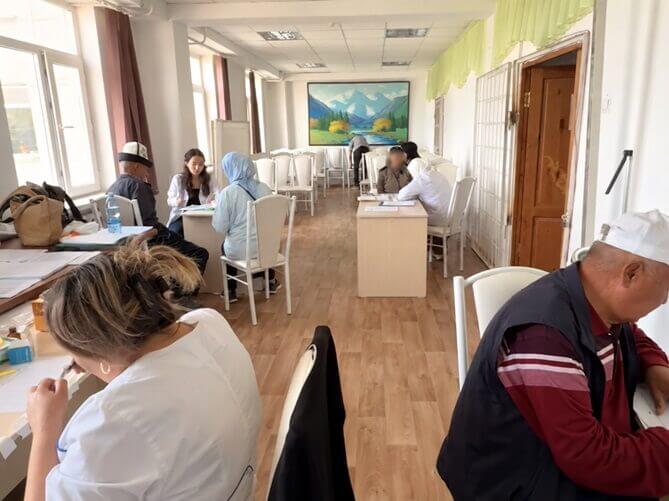
Research screening during a mobile outreach visit. Balykchy, September 2026.
Scientific leadership and team
Principal investigator in Kyrgyzstan: Cholpon Shambetova, neurologist, movement disorders specialist, and doctoral researcher at the Institute of Neurogenetics, University of Lübeck. The work began in late 2023 as part of her doctoral research under the supervision of Professor Christine Klein. Collaboration between KSMA, the University of Lübeck, and local partners, with GP2 support, enabled the expansion of research and educational activities.
The multidisciplinary team includes clinicians, researchers, laboratory staff, research coordinators, and specialists in data management and analysis.
Ethics and data protection
The study was approved by the KSMA Bioethics Committee, approval No. 3, dated 27 December 2023. Research data and biological samples are labelled with unique participant codes. Identifying information is stored separately from research datasets. The use and transfer of data and samples are governed by informed consent, ethics approvals, and applicable agreements. The relevant permissions for biological sample transfer have been obtained from DLO under the Ministry of Health of the Kyrgyz Republic.
International cooperation
Two memoranda provide the institutional framework for cooperation:
- The Ministry of Health of the Kyrgyz Republic and the University of Lübeck, November 2024. The memorandum provides for joint research, biobank development, training, academic exchanges, and scientific publications, as well as the transfer of research data and biological samples in accordance with applicable requirements.
- The I. K. Akhunbaev Kyrgyz State Medical Academy and the Institute of Neurogenetics, University of Lübeck, 27 October 2025. The memorandum provides for joint research and educational projects, academic exchanges, training placements, and publications. It also provides for the development and implementation of dual educational programmes, including a PhD programme in molecular medicine.
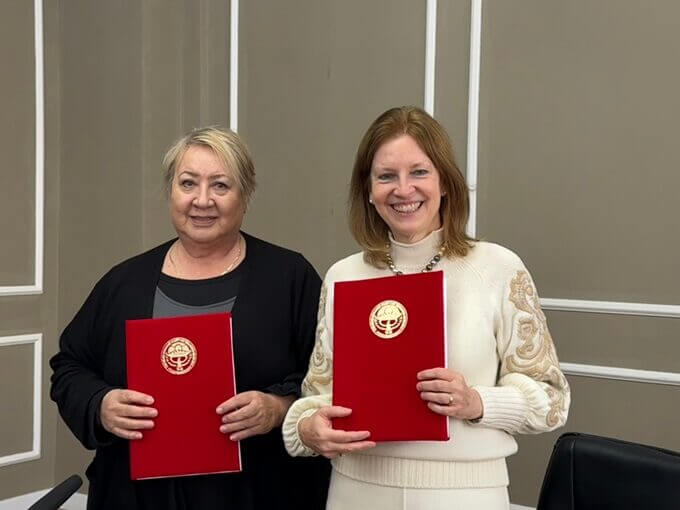
Visit by a University of Lübeck delegation to KSMA and signing of a memorandum of cooperation. Bishkek, October 2025.
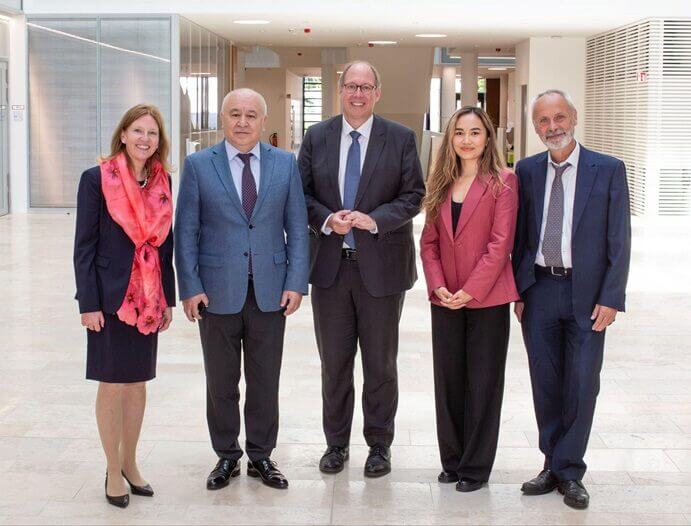
Visit by Omurbek Tekebaev, Ambassador of the Kyrgyz Republic to Germany, to the University of Lübeck. Lübeck, Germany, July 2026.
Team publications and open research resources
Publications
- Goh XY, Shambetova C, Toh TS, Zhunusova E, et al. Optimizing participant recruitment and retention in clinical studies by hearing the voices of persons with Parkinson’s. Journal of Parkinson’s Disease. 2026. https://doi.org/10.1177/1877718X261479268
- Lim SY, Kumar H, Luo W, Carr J, Aldaajani Z, Shambetova C, Jagota P, Susatia F, Zhunusova E, Cen Z, Choudhury S, Bohlega S, Cardoso F. Breaking barriers and fighting inequality in Parkinson’s disease care: Personal reflections of movement disorders clinicians. Journal of Parkinson’s Disease. 2026. https://doi.org/10.1177/1877718X261468201
Preprint
Shambetova C, Zhunusova E, Ismailova A, Periñan MT, Kiyalbekova S, Gabbert C, Lim SY, Djumalieva G, Iliazova A, Beishembieva N, Kubanychbekova A, Kanana Y, Peredereeva E, Metinov A, Sorokin A, Abdumalikova A, Bazarbaeva S, Pakhridinova G, Sattarova B, Upaeva A, Zhamilova G, Zhumadylova E, Mamytova E, Baisalov M, Baitelieva A, Imanalieva J, Bolotalieva A, Toktomametova A, Atambekova N, Baltabaeva S, Dalbaeva A, Osmonova Z, Nurbekova B, Mukhanova A, Tsopova I, Kleinz T, Sverdlova I, Lange LM, Trinh J, Blauwendraat C, Singleton A, Münte TF, Noyce AJ, Kudaibergenova I, Klein C, Global Parkinson’s Genetics Program (GP2). A scalable model for Parkinson’s disease genetic research in underrepresented populations: lessons from Kyrgyzstan. medRxiv. 2026.https://doi.org/10.64898/2026.09.08.26362411
Congress Abstracts
- Zhunusova E, Kyialbekova S, Shambetova C. [Treatment Patterns in Parkinson’s Disease in Kyrgyzstan: Evidence from a Kyrgyz PD Cohort] (https://www.mdsabstracts.org/abstract/treatment-patterns-in-parkinsons-disease-in-kyrgyzstan-evidence-from-a-kyrgyz-pd-cohort/) [abstract]. Movement Disorders. 2026;41(Suppl 1).
- Kubanychbekova A, Ismailova A, Zhunusova E, Kyialbekova S, Abdumalikova A, Shambetova C. [Pesticide Exposure and Smoking in Parkinson’s Disease in Kyrgyzstan: A Case–Control Study] (https://www.mdsabstracts.org/abstract/pesticide-exposure-and-smoking-in-parkinsons-disease-in-kyrgyzstan-a-case-control-study/) [abstract]. Movement Disorders. 2026;41(Suppl 1).
- Kyialbekova S, Zhunusova E, Shambetova C. [Early-Onset and Familial Parkinson’s Disease in Kyrgyzstan: A PD Cohort Subset for Family-Based Genetic Studies] (https://www.mdsabstracts.org/abstract/early-onset-and-familial-parkinsons-disease-in-kyrgyzstan-a-pd-cohort-subset-for-family-based-genetic-studies/) [abstract]. Movement Disorders. 2026;41(Suppl 1).
Open research resources
- KyrPARK case report form: research data collection instrument, available on Zenodo.
- KyrPARK analysis code: available on GitHub.
- Archived analysis code: a version with a permanent DOI, available on Zenodo.
Participation in international scientific meetings
Team members present their work and exchange expertise at international scientific meetings, including the Asian and Oceanian Parkinson’s Disease and Movement Disorders Congress (AOPMC) and the International Congress of Parkinson’s Disease and Movement Disorders.
Suium Kiyalbekova and Aizhamal Ismailova presented conference abstracts and research at AOPMC 2025 in Tokyo, Japan. Eliza Zhunusova and medical student Aruuke Kubanychbekova presented at the MDS Congress 2026 in Seoul, South Korea.
Cholpon Shambetova, the project’s principal investigator in Kyrgyzstan, presents annually at Global Parkinson’s Genetics Program (GP2) investigator meetings, sharing progress and the development of the research program in Kyrgyzstan.
Significance for KSMA
The project strengthens KSMA’s capacity for clinical and genetic research, supports training and mentorship for the local team, and develops the biorepository and digital research infrastructure. Collaboration between institutions in Kyrgyzstan and international partners provides a foundation for further research and joint scientific publications.
Support and contacts
Project support
The project is supported by the Global Parkinson’s Genetics Program (GP2). GP2 is funded by Aligning Science Across Parkinson’s (ASAP) and implemented by The Michael J. Fox Foundation for Parkinson’s Research (MJFF).
The I. K. Akhunbaev Kyrgyz State Medical Academy provides premises and organisational support for research and clinical activities. The University of Lübeck contributes scientific collaboration and mentorship. The GP2 Training and Networking Working Group and the GP2 Monogenic Network provide scientific and methodological guidance.
The Ministry of Health of the Kyrgyz Republic and the Embassy of the Kyrgyz Republic in Germany facilitate institutional cooperation. The International Parkinson and Movement Disorder Society (MDS) supports selected educational activities and specialized clinical training.
We thank the study participants and their families, partner organizations, including the Movement Disorders and Parkinson’s Disease Alliance, and the research team in Kyrgyzstan for their contributions to the project.
Research and collaboration
Cholpon ShambetovaPrincipal Investigator in Kyrgyzstan; Lead of the Parkinson’s Disease Research Group at the Center for Biomedical Research and Innovation, I. K. Akhunbaev Kyrgyz State Medical Academy.
Email: [email protected], [email protected]
Clinical consultations
Specialist consultations are provided by Dr Eliza Zhunusova, a neurologist specializing in Parkinson’s disease and movement disorders, at Academic Clinic No. 7 of the I. K. Akhunbaev Kyrgyz State Medical Academy (formerly the Republican Diagnostic Centre).
Address: 27/1 Kievskaya Street, 2nd floor, Bishkek, KyrgyzstanTelephone: +996 702 241 452